City & Service-Area Pages
You serve eight towns but rank in one. The fix is a page per town — and the reason it usually fails is that people build the same page eight times.
Real local detail on every page
the actual subdivisions, ZIPs and areas people in that town name when they describe where they live
Written for how that town searches
"plumber Cypress TX" and "plumber near Bridgeland" are different searches and sometimes different pages
Linked to each other and to your service pages
so the cluster reinforces itself instead of eight orphans
Local schema and breadcrumbs
telling Google explicitly which city each page is about
Honest about your service area
a page for a town you won't actually drive to produces calls you have to turn down
Spanish versions where the market is there
which around Houston is most places, and where competition is usually thinner
City & Service-Area Pages
Why the copy-paste version doesn't work
The standard approach is to write one city page and then duplicate it, swapping the city name. Google has been able to spot that for well over a decade. The pages get treated as near-duplicates, one might rank thinly, and the rest sit there doing nothing — or drag on the rest of the site.
A city page ranks when it's genuinely about that city. Different neighborhoods, different ZIP codes, different landmarks, something true about working there. That takes longer to produce and it's the entire difference between eight pages that work and eight pages that are dead weight.
City & Service-Area Pages
How many pages, and in what order
Start with the towns you already work in and want more of. A page for a city where you've done real jobs writes itself and ranks faster, because you have something specific to say and often photos to prove it.
Then expand outward, one town at a time, in order of what a customer there is worth to you. Eight thin pages published at once is worse than two real ones published a month apart. This is the single most common way this tactic gets ruined — someone buys "50 city pages" as a package and ends up with fifty reasons for Google to trust the site less.
There's a ceiling worth knowing about too: a city page can rank in organic results for a town you don't have an address in, but it won't put you in that town's map pack. The map pack follows your actual location. Anyone promising otherwise is promising something Google doesn't do.

City & Service-Area Pages
What it looks like in practice
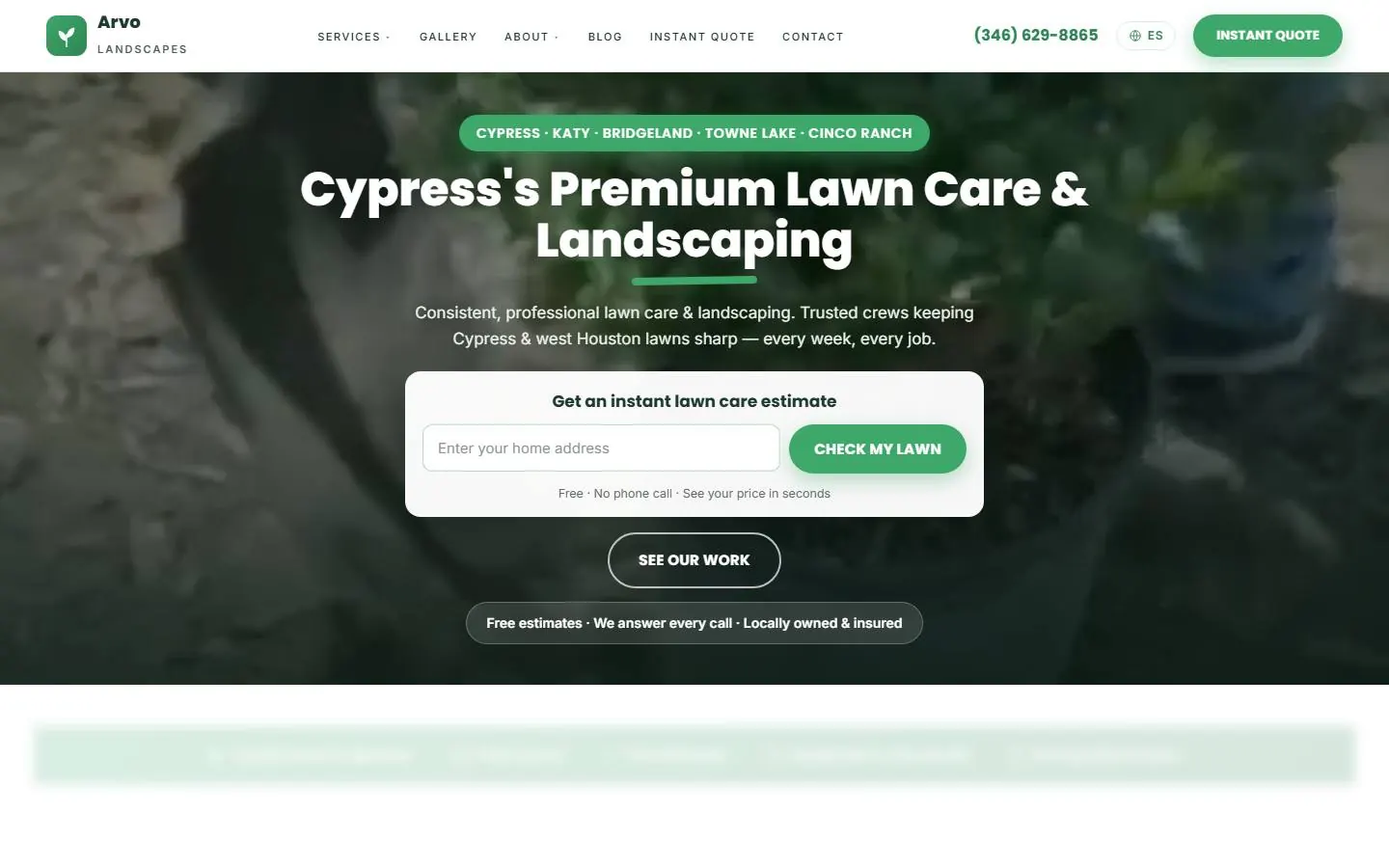
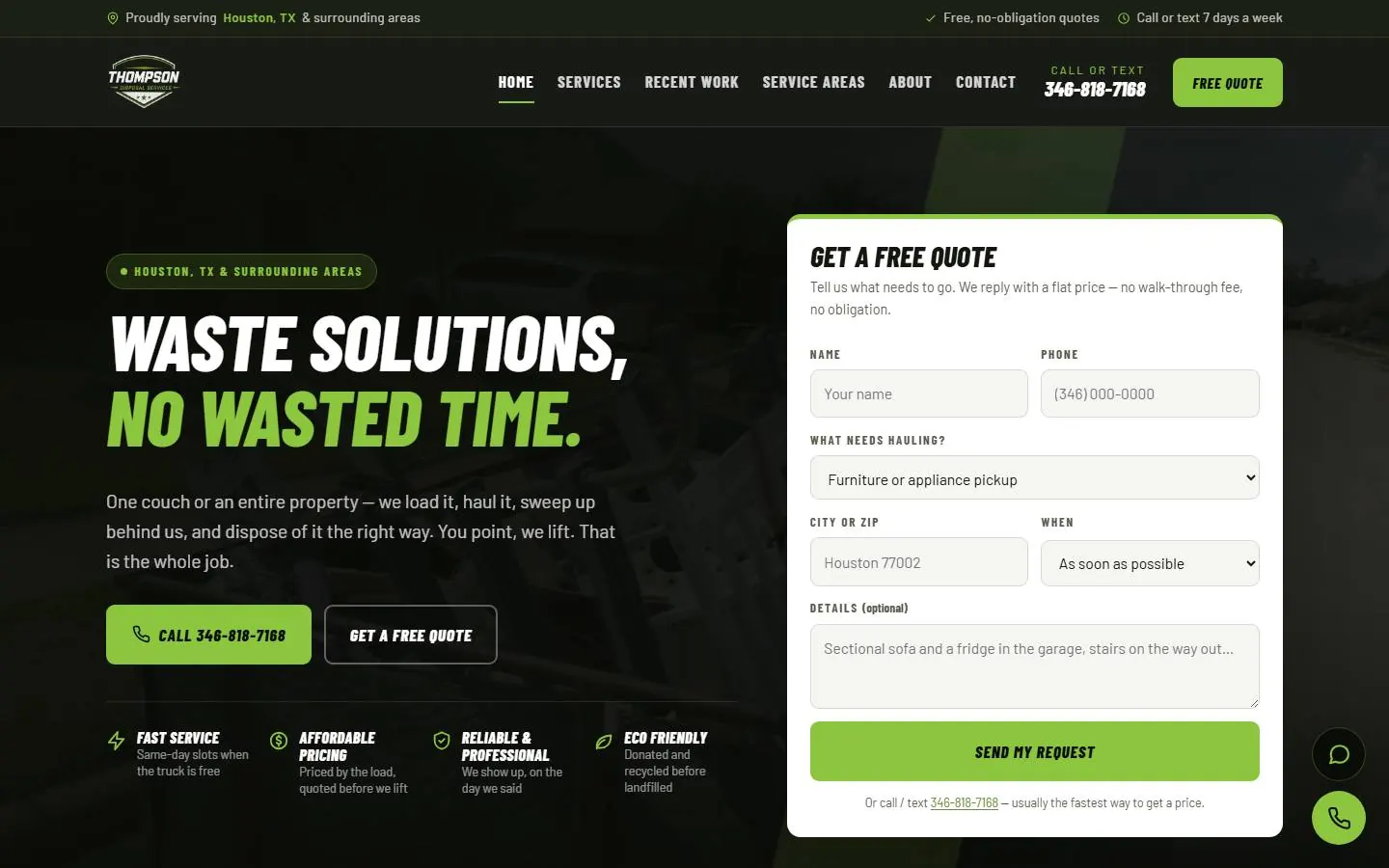
This site has eight of them — Cypress, Katy, Houston, Tomball, Spring, Jersey Village, Waller and Hockley. You can open any two and see that they're different pages, not one page wearing different names. That's the standard we build to, and it's easy to check, which is the point.
The same structure works for industries as well as cities, when a trade needs it: a page for the specific kind of customer rather than the specific town.
How we work
Three things decide who gets the call.
Technical
Fast, secure and easy for Google to read on every phone.
Relevance
Pages that match what your customers actually search for.
Authority
Real reviews and clean listings that make you the trusted choice.
Which towns are you missing?
Tell us where you work and where you'd like to. We'll tell you which cities are realistically winnable and which aren't worth the page.
Get My Free Audit